Showing posts with label sacramental worship. Show all posts

Thursday, April 4, 2013

A Brief Explanation of Lutheran Hymnody: For the Lutheran who asks regarding the Beautiful Hymns of His church

The Handbook to the Lutheran Hymnal, 1942 Three weeks ago, we published a lengthy post entitled, An Explanation of Lutheran Worship: For the Lutheran who asks the Meaning of the Beautiful Liturgy of His church. The body of that post contained a full Explanation of the Common Service — the order of Divine Service beginning on “page 15” of The Lutheran Hymnal which was published by the Synodical Conference in 1941. An English-language harmony of sixteenth century Lutheran liturgies published in 1888 by the General Council of the Evangelical Lutheran Church in America, it still serves as a benchmark of liturgical excellence. Indeed, in our recent post, Lutheranism and the Fine Arts: Dr. P.E. Kretzmann and the Necessity of Continuing Catechesis, we quote Dr. Kretzmann referring to the Common Service as unsurpassed in the entire history of the Christian Church.

The Explanation we published two weeks ago was taken directly from catechetical materials developed by the General Council for the distinct purpose of educating Lutherans regarding the doctrinal integrity and catholicity of genuine Lutheran worship. Indeed, this Explanation of the Common Service, published in 1908, was dedicated to the “Young Lutheran who asks the meaning of the beautiful liturgy of the Lutheran Church.” In our introductory remarks preceding the explanation, we marveled at this. Lutherans these days don't educate their youth about Lutheran worship, and if they do, they don't do so in a way that extolls it's beauty as a work of Fine Art, nor do they do so in a way that reinforces its doctrinal integrity, nor do they do so in a way that embraces its catholicity. One of the bright shining exceptions to the lamentable reality that contemporary Lutherans no longer value their heritage of worship enough to bother passing it down to their youth, is the LCMS-affiliated organization, Higher Things. Outside of this organization, the best one can hope for is a one- or two-lesson explanation of Lutheran worship which neither extolls its beauty nor places value on its doctrinal integrity and catholicity, but uses the opportunity to deride our heritage by vaunting its status as “an adiophoron” and setting it on equal footing with just about any form of Sectarian Worship imaginable – as long as one wears the appropriate set of blinders as he goes about imagining. Yeah, sure, you can do it, but why would you want to? In answer to this one needs but a “reason,” and in the world of adiaphora that merely means “opinion.” Thus one “reason” is as good as another, and anything one can “justify” has open license attending it.

But we further asked the reader to notice the use of language this Explanation employed. It was not written for functionally illiterate Lutherans who find reading and understanding anything written above the sixth-grade reading level to be a hopeless struggle. On the contrary, being dedicated to the “Young Lutherans,” it was written to Lutheran Youth, and plainly assumed that they had command of their own language. If it was written above their level, then it served the noble purpose of lifting them out of their immature literacy and colorless task-oriented-use of language, through the rich vocabulary and precise grammar employed in the distinctive and enculturating language of the Church. Contemporary Lutherans, it seems, no longer value the uplifting qualities of higher literacy, either.

Regardless of what the so-called wise-men of contemporary times insist upon, I am not ready to succumb to such disrespect for others that my operative assumption is that they are all functionally illiterate. I don't think all, or most, or even a significant minority of educated Lutherans are just a bunch of dumb-dumbs who can't read. Some very-well may refuse to read anything more complex than a comic book, but that is a separate matter – a matter of sinful obstinacy, and perhaps even rebellion. It is not a matter of literacy. So today, we are going to continue our use of materials having high-literary quality to provide a brief explanation of Lutheran hymnody.

What is a Hymn? A Canticle? A Carol? An Anthem?
We begin with the source pictured at the top left: The Handbook to the Lutheran Hymnal, by W. G. Polack – who was the chairman of The Lutheran Hymnal committee. This work first appeared in 1942, essentially accompanying the publication of The Lutheran Hymnal, and went through several revisions thereafter. It is a book which catalogs all of the hymns used in The Lutheran Hymnal, identifying their authors and sources, providing a history of the circumstances under which the hymn was written (if notable), reproducing the hymn in its original language alongside the English version which appeared in the hymnal and identifying (sometimes justifying) alternate readings from the original composition. It is considered a classic in the field of hymnology.

Saturday, March 16, 2013

An Explanation of Lutheran Worship: For the Lutheran who asks the Meaning of the Beautiful Liturgy of His church

The Lutheran Hymnal, 1941Last week, we published an article entitled, Lutheranism and the Fine Arts: Dr. P.E. Kretzmann and the Necessity of Continuing Catechesis. It stood in stark contrast against the depraved junk being pushed by the Church Growth Movement (CGM), which, though vaulting the latest in “scientific methodology”, nurtures anti-intellectualism as much as it promotes mediocrity, turning its back on the preaching and teaching of sound doctrine and repudiating the hard work of rigorous catechesis in order to make Christianity more outwardly attractive to the unregenerate who despise Christ and the teaching of His Word. Another term for this among CGM advocates is, “Evangelism.”

But most importantly, that post emphasized the need not only for rigorous catechesis, but of a broad catechesis that includes more than just Bible study. In that post, Dr. Kretzmann and the Walther League strongly encouraged complementary catechesis in areas of Church History, of Christian Missions, of Distinctive Lutheran Doctrines, Customs and Usages of the Lutheran Church, of Church Art, of Science, and of Literature. And within the category of Church Art was included the very important topic of Liturgics.

In fact, the catechesis of the Lutheran Worshiper was the topic of another recent post on Intrepid Lutherans, The Catechesis of the Lutheran Worshiper: An antidote to the “itching ears” and “happy feat” of CGM enthusiasts?. In that post we drew the distinction between those who favor so-called “contemporary worship,” as those who Congregate before Entertainers, with those who retain a wholesome catholicty and still embrace the distinctive practices of historic Lutheran liturgy, as those who Congregate before the Means of Grace.

But what is such “wholesome catholicty”? What is the “distinctive practice of historic Lutheran liturgy”? Do American Lutherans of the 21st Century even have such a thing? If so, is it at all in general use? Maybe they do, maybe they don't, but one thing is for sure: they certainly had such in the 19th and 20th Centuries, AND they had catechetical materials to go along with it for the purpose of teaching successive generations about Lutheran worship.

Lutherans of these bygone times highly valued the wholesome catholicty of their historic Lutheran worship practices, that served to starkly contrast them with the American sects which surrounded them — which had in many cases been given over to the evangelical revivalism of Charles Finney, and to practices emanating from the Holiness movements within American Methodism (as discussed in our recent post, The Church Growth Movement: A brief synopsis of its history and influences in American Christianity). Even in confessional Lutheran churches in America, the allure of the Anxious Bench became increasingly difficult to resist, and Methodist hymnals were, distressingly, in growing demand (as Dr. C.F.W. Walther laments, in our post, C.F.W. Walther: Filching from sectarian worship resources equals “soul murder”). It was within this environment that the confessional and liturgical movements of the 19th Century grew, and worked toward the establishment of confessional unity among Lutherans in America, and to distinguish and insulate American Lutheranism from the poison of sectarian influences.

In 1908, the General Council of the Evangelical Lutheran Church in America published an Explanation of the Common Service – a harmony of sixteenth century Lutheran liturgies published in 1888, in the English language. This is the same Common Service found in The Lutheran Hymnal, which was published by the Synodical Conference in 1941, and which is still used in many Lutheran congregations even today. It is my understanding that, in many circles, this liturgy of the Divine Service is still referred to as a benchmark of liturgical excellence. Indeed, in our recent post, Lutheranism and the Fine Arts..., Dr. Kretzmann refers to the Common Service as “unsurpassed in the entire history of the Christian Church.” Sadly, however, though many Lutherans still use it, most Lutherans, and nearly all young Lutherans, are completely ignorant of this fine and beautiful liturgy, having never had the privilege of being consistently guided through worship under the rubrics of this Common Service.

Interestingly, the Explanation published in 1908 by the General Council of the Evangelical Lutheran Church in America, was dedicated to this very group of people, to the “Young Lutherans who ask the meaning of the beautiful liturgy of the Lutheran Church.” As you read this Explanation, notice its use of language. Consider the fine education and catechesis “Young Lutherans” must have enjoyed a century ago, which was deliberately reinforced by the church in books such as this. Do Lutheran publishing houses have such respect and concern for the youth of today? Certainly, they target young people with a great deal of material, so concern unquestionably exists — but does the quality of these materials generally rise to this level? Does it specifically advocate and reinforce Confessional practice? Does it refer to the liturgy as something “beautiful” and as something to be valued? I don't believe I've seen this sort of thing coming from the main Lutheran publishers.

Therefore, in the interest of those who would otherwise never have the opportunity to know, the following Explanation of the Common Service is offered. It explains Lutheran worship according to what has been considered the definitive Lutheran liturgy yet produced – a liturgy which is nevertheless disappearing under the short-sighted tyranny of “contemporary relevance,” and an explanation whose need has long been disregarded as counterproductive to progress and to the future of Evangelical church practice.


Note: the reader may recognize this Explanation as having appeared on Intrepid Lutherans in the past. In fact, it was published as a series in the Summer of 2010, as follows:It is offered, below, in a single unbroken post.

Note also that this explanation, though long out of print, is now available in book form from Emmanuel Press, one of the fine confessional Lutheran publishers listed in the right-hand column of this blog.


Tuesday, November 13, 2012

The Gospel motivates fidelity to doctrine in practice: Brief words on the use of distinguishing clerical attire

Way back in September of 2010, I published a brief essay entitled, "How, then, shall we be attired?" or "Why I Wear a Tie to Church". It began with a statement in the introductory paragraph suggesting that there is a foundation in what people are convinced as a matter of Christian Conscience is True for how they act; suggesting, that is, that Christian doctrine may actually be the foundation of Christian practice rather than being completely disassociated from it: "There's a reason why people have reserved some of their finest clothing for Sunday, referring to it as their 'Sunday Best,' and I think there are good reasons for Christians to continue doing so. What we do is a reflection of what we hold to be True."

From this point my brief essay proceeded by describing some of the important Truths of Christian doctrine which confessional Lutherans, who recognize the significance of historical belief and practice, consider the ongoing realities of incarnational and sacramental doctrine, and suggesting that these realities, if they are actually regarded as such rather than merely claimed as such, are sufficient to motivate practice that is consistent with them. Namely, we believe that Jesus Christ is actually present in the Divine Service, and is there actively serving us. If we not only claim that this is true, but actually believe it is true, then we are apt to engage in practice that is consistent with actually believing it, rather than merely saying it. This includes our choice of attire, as I continued in that little essay. At no point was Law used as a basis for suggesting that certain attire may be more appropriate than certain other attire; instead, it pointed to the significance of the Gospel as motivation for the desire to represent with fidelity what we confess to believe. Indeed, it concludes with the strong suggestion that such practice is not only consistent with important Christian realities, but is evangelical as well: "The reality is, in Western Society, the Christian's 'Sunday Best' is his 'religious garb' – it openly communicates his Christian religion and his observance of it to those who see him, and opens doors of communication where inconspicuous dress would fail to do so."

Appealing to the Gospel, Rev. Michael Berg (WELS) suggested much the same thing in his excellent paper, The Beauty of the Western Rite, which he delivered at the 2012 Conference of Intrepid Lutherans: Church and Continuity – see pages 11, 26, 36 and 54, for example, or hear his comments @~5'45" to ~7'35", @~10'45" to ~11'50", @~38'10" to ~42' or @~44'35" to ~54' in the video we posted of his presentation. Who is actually present in the Divine Service, and how does that motivate the order of our practice? Rev. Berg offers a very compelling case.

Likewise, Rev. Anthony Voltattorni (LCMS), in a November 6, 2012 interview on Issues, Etc., makes a compelling and motivating case for the use of traditional clerical garb instead of the non-distinguishing casual wear that continues to grow in popularity as pastors grow more and more disconnected from their office, and take on the role of representing contemporary culture before the congregation rather than Christ.

Why Does a Pastor Wear a Clerical Collar? – Rev. Anthony Voltattorni (LCMS), 11/6/12


In this 30 minute interview, Rev. Voltattorni centers his discussion on the evangelical significance of Office of the Holy Ministry. He makes the point that according to this Lutheran teaching, the pastor does not represent the culture before the congregation during the Sunday morning Divine Service or through the week as he carries out the functions of his Office. On the contrary, the pastor represents Christ. The evangelical significance of this teaching is compelling enough to motivate the conscientious Lutheran pastor in his public practice, such that he strives to carry it out in an unambiguous and consistently representative way. The purpose of casual garb, observes Rev. Voltattorni, is to fulfill the former (and wrong) understanding of his role – that of representing the culture before the congregation – by drawing attention to himself as a representative of mankind. In contrast, the purpose of clerical garb is to fulfill the latter – of unambiguously representing Christ by adopting the attire recognized worldwide as peculiar to his Office – by reminding not only the congregation of this fact, but himself as well, helping him submit to his Office and refrain from frivolity and offense. Rev. Voltattorni proceeds by pointing out that distinctive clerical garb does draw attention to it's wearer, in agreement with one of the primary criticisms of its use. Yet, he continues, casual wear attracts attention as well – it does not make the wearer inconspicuous, it only makes his Office inconspicuous. Distinctive clerical garb, on the other hand, draws attention to its wearer as one who occupies the Office to which Christ appointed him through His congregation, and as one who is always eager to represent Christ and share his Message everywhere he goes. Moreover, concludes Rev. Voltattorni, by publicly distinguishing himself in this way, instead of remaining inconspicuous when in public, the pastor is not only announcing his desire to share the Good News of Salvation through Faith in the promises of Christ, he is also boldly inviting persecution from those who hate Christ and His messengers.

It is an informative and compelling little interview, and, of course, Rev. Voltattorni expresses himself far better than I have summarized him here. We recommend that our readers listen to and consider what Rev. Voltattorni has to say.

Wednesday, June 13, 2012

Church and Continuity Conference Review: The Beauty of the Western Rite – by Rev. Michael Berg

The third presentation on Saturday was given by Rev. Michael Berg: “The Beauty of the Western Rite, Part 1.” More than a simple explanation of the parts of the historic Divine Service, the first section of Rev. Berg’s paper explores the sacramental nature of Lutheran worship and how various worship forms are a response to the fundamental question, “Who is present?” in worship. Like Rev. Boehringer, Rev. Berg also emphasizes the bound will of man, the theology of the cross and Christian vocation, and suggests that an evangelical and catholic Lutheranism that remains true to its theology holds out exactly what a postmodern world needs.

In "The Beauty of the Western Rite, Part 2," Rev. Berg tells a short story called, "Any Given Sunday," in which he illustrates in a very down-to-earth way how the Divine Service confronts real-life sinners in the midst of their troubles, struggles, joys and sorrows and brings the Word of God to them right where they need it.  This section also includes an explanation of the benefits of offering Holy Communion every Sunday.


Conference of Intrepid Lutherans: Church and Continuity ~ June 1-2, 2012
Bethlehem Lutheran Church ~ Oshkosh, WI
The Beauty of the Western Rite, Part 1
The Beauty of the Western Rite, Part 2

by Rev. Michael Berg.

Wednesday, March 23, 2011

C.F.W. Walther: Filching from sectarian worship resources equals "soul murder"

In October of 1998, Professor Mark DeGarmeaux (Bethany Lutheran College, ELS) delivered a paper to the Evangelical Lutheran Confessional Forum of the ELS and WELS in Milwaukee, WI. The title of this paper was Sacramental Worship, Sacramental Preaching: Treasures of our Lutheran Church -- a terrific little essay that explores and extols the unique liturgical treasure we Lutherans have inherited, concluding:
    The Lutheran church has been truly blessed by God with a rich treasury of liturgy, hymnody, preaching, and praying. We are not a sect, but we understand and recognize ourselves as part of the Church catholic, the one Holy Christian and Apostolic Church. At the same time we realize that there is a difference between our theology and that of other denominations in many ways. Our treasures are in the understanding of sacramental and sacrificial elements in the Divine Service, in understanding the Word and Sacraments as powerful and efficacious means of grace, and in the proper distinction between Law and Gospel. And we look forward to the marriage feast of heaven when the Bride will be joined to Christ Himself and will enjoy the great sacramentum of the marriage feast of the Lamb.
This treasure has been kept and valued by generations of Lutheran confessors as a practice which carries a body of worshipers through the Divine Service, focusing them on Christ and His gifts, in a way that not only represents and reinforces our body of pure doctrine, but our distinction and separation from the heterodox. So how would a Lutheran, imbued with genuine confessional ardor, react to the notion of importing sectarian worship forms into Lutheran practice? Using C.F.W. Walther as a benchmark of confessional ardor, DeGarmeaux demonstrates the answer to this question by including as an Appendix to his essay the following letter from Walther, which was written to a man who asked about the use of Methodist worship resources in Lutheran churches:
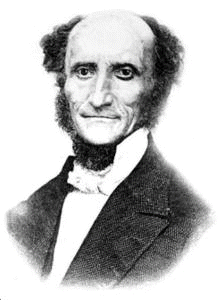
    Carl Ferdinand Wilhelm WaltherHonored Sir,

    This morning I received your worthy letter, written on the 19th of the month. In your letter you ask for my opinion on whether it is advisable to introduce the singing of Methodist songs in a Lutheran Sunday School. May what follows serve as a helpful reply to your questions:

    No, this is not advisable, rather very incorrect and pernicious.

    1. Our church is so rich in hymns that you could justifiably state that if one were to introduce Methodist hymns in a Lutheran school this would be like carrying coals to Newcastle. The singing of such hymns would make the rich Lutheran Church into a beggar which is forced to beg from a miserable sect. Thirty or forty years ago a Lutheran preacher might well have been forgiven this. For at that time the Lutheran Church in our country was as poor as a beggar when it comes to song books for Lutheran children. A preacher scarcely knew where he might obtain such little hymn books. Now, however, since our church itself has everything it needs, it is unpardonable when a preacher of our church causes little ones to suffer the shame of eating a foreign bread.

    2. A preacher of our church also has the holy duty to give souls entrusted to his care pure spiritual food, indeed, the very best which he can possibly obtain. In Methodist songs there is much which is false, and which contains spiritual poison for the soul. Therefore, it is soul-murder to set before children such poisonous food. If the preacher claims, that he allows only "correct" hymns to be sung, this does not excuse him. For, first of all, the true Lutheran spirit is found in none of them; second, our hymns are more powerful, more substantive, and more prosaic; third, those hymns which deal with the Holy Sacraments are completely in error; fourth, when these little sectarian hymnbooks come into the hands of our children, they openly read and sing false hymns.

    3. A preacher who introduces Methodist hymns, let alone Methodist hymnals, raises the suspicion that he is no true Lutheran at heart, and that he believes one religion is as good as the other, and that he thus a unionistic-man, a mingler of religion and churches.

    4. Through the introduction of Methodist hymn singing he also makes those children entrusted to his care of unionistic sentiment, and he himself leads them to leave the Lutheran Church and join the Methodists.

    5. By the purchase of Methodist hymn books he subsidizes the false church and strengthens the Methodist fanatics in their horrible errors. For the Methodists will think, and quite correctly so, that if the Lutheran preachers did not regard our religion as good as, or indeed, even better than their own, they would not introduce Methodist hymn books in their Sunday schools, but rather would use Lutheran hymn books.

    6. By introducing Methodist hymn books, the entire Lutheran congregation is given great offense, and the members of the same are lead to think that Methodists, the Albright people, and all such people have a better faith than we do.

    This may be a sufficient answer regarding this dismal matter. May God keep you in the true and genuine Lutheran faith, and help you not to be misled from the same, either to the right or to the left.

    Your unfamiliar, yet known friend, in the Lord Jesus Christ,

    C. F. W. Walther
    St. Louis, Missouri
    January 23, 1883
Notice that there are at least two factors involved in Walther's blistering criticism of sectarian worship resources. First, the introduction of false teaching to the congregation (a) by the false content of the sectarian worship, (b) by the true teaching which is absent from it, and (c) by the manner in which the Methodist practice itself entices the congregation away from the Lutheran confession, is inexcusable and alone grounds for rejecting material from such sources. Second, the fellowship implications involved with endorsing such materials, and subsidizing their sources, not only impacts other Lutherans, who have every right to question the allegiances of those responsible for introducing such materials, but impacts the sectarians from whom we remain separate, who consequently have every right to suspect (based on the practice of using sectarian sources, itself!) that those Lutherans using their materials are, in fact, admitting deficiency in their own confession.

If we grant that Walther is a suitable benchmark of confessional ardor, how would we categorize those who are indifferent to the usage of sectarian and heterodox worship materials? According to Walther, above, it seems that a pastor who engages in practice which raises suspicions regarding his confession is himself guilty of offense against the whole congregation, not the observer who is led to suspicion on the basis of that pastor's public practice. Is this an accurate assessment of the above statements? If so, is this consistent with more contemporary teaching regarding how one ought to interpret public practice? Based on what Walther seems to say above, should a Lutheran pastor so conduct himself in his public practice as to raise no suspicions regarding his fidelity to the Lutheran confession, or is such fidelity strictly a matter of internal motivations, making public practice not much of a big deal at all?

Creative Commons License
This work is licensed under a Creative Commons Attribution-Noncommercial-No Derivative Works 3.0 United States License